One of the most practical questions people ask before Hajj or Umrah is:
How much does food cost in Makkah and Madinah?
It sounds like a simple budgeting question, but the answer depends on how you eat, where your hotel is, whether meals are included in your package and, perhaps most importantly, how close you are to Masjid al-Haram or Masjid an-Nabawi.
You can eat surprisingly cheaply in both cities. You can also spend a considerable amount without really noticing it. A simple rice and chicken meal from a local restaurant may cost a fraction of what you would pay at a hotel restaurant overlooking the Haram. Coffee, desserts, food courts, delivery apps and regular family meals can quickly add up as well.
For pilgrims coming from the UK, my advice is simple: do not worry excessively about food costs, but do give yourself a realistic daily budget before you travel.
Your time in Makkah and Madinah is precious. You do not want to spend it constantly calculating every Riyal, nor do you want to return home wondering where all your spending money disappeared.
This guide will help you find that balance.
Miqat Tip: Food in Saudi Arabia can suit almost every budget. The biggest difference is often not what you eat, but where you eat it.
How Much Does a Typical Meal Cost in Makkah?
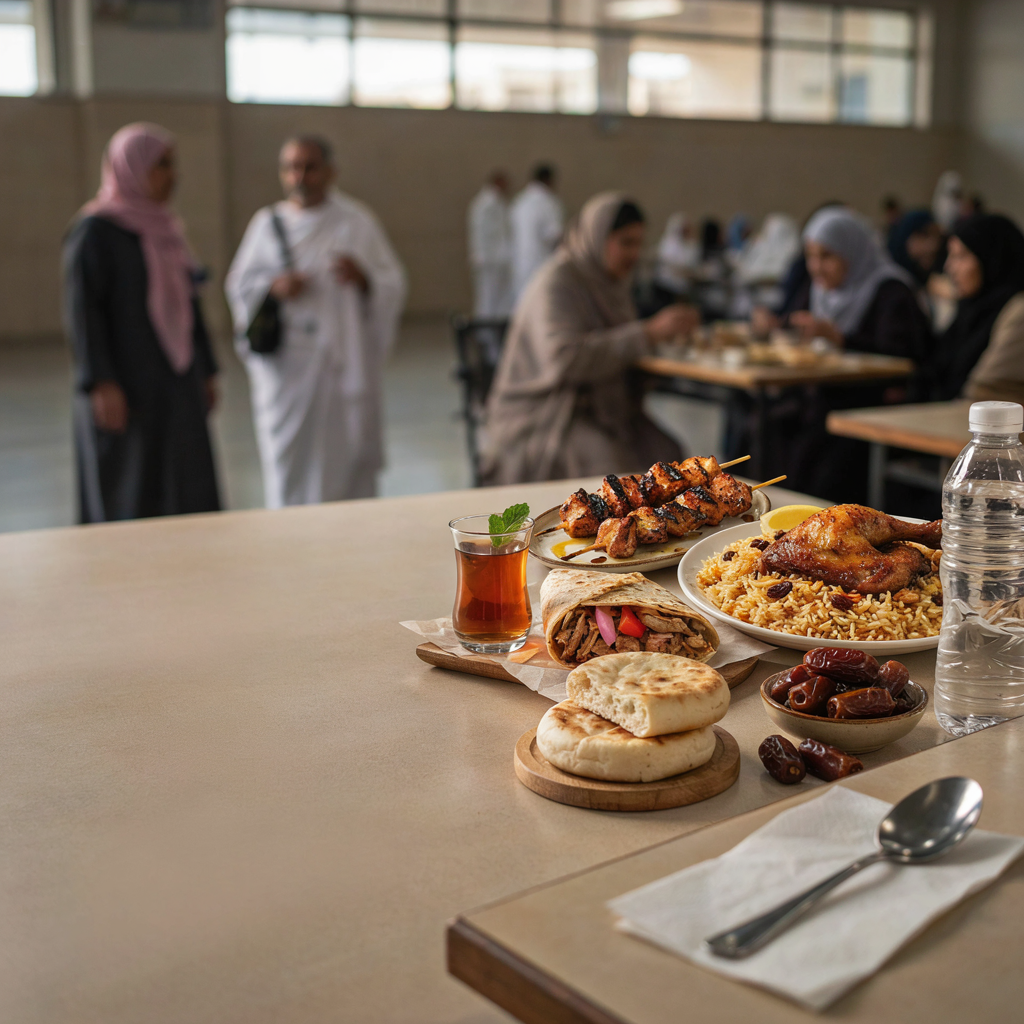
As a general 2026 guide, an inexpensive restaurant meal in Makkah can be found for around SAR 12–25, although prices can go significantly higher depending on the restaurant and location.
A standard fast-food meal is often around SAR 20–35.
For two people eating at a mid-range restaurant, you could easily spend somewhere around SAR 70–150 or more, particularly in hotel districts and shopping centres.
These are not fixed prices.
Think of them as practical budgeting ranges.
Typical Makkah Food Budget
| Type of Food | Approximate Cost |
|---|---|
| Simple breakfast | SAR 8–20 |
| Shawarma / sandwich | SAR 6–15 |
| Local rice and chicken meal | SAR 15–30 |
| Fast-food meal | SAR 20–35 |
| Coffee | SAR 8–20 |
| Mid-range restaurant meal | SAR 30–70+ per person |
| Hotel buffet | SAR 60–150+ |
| Water / small drinks | SAR 1–5 |
You may find cheaper options farther from Masjid al-Haram.
Around the major hotel complexes, shopping malls and premium restaurants close to the Haram, expect to pay more.
How Much Does Food Cost in Madinah?
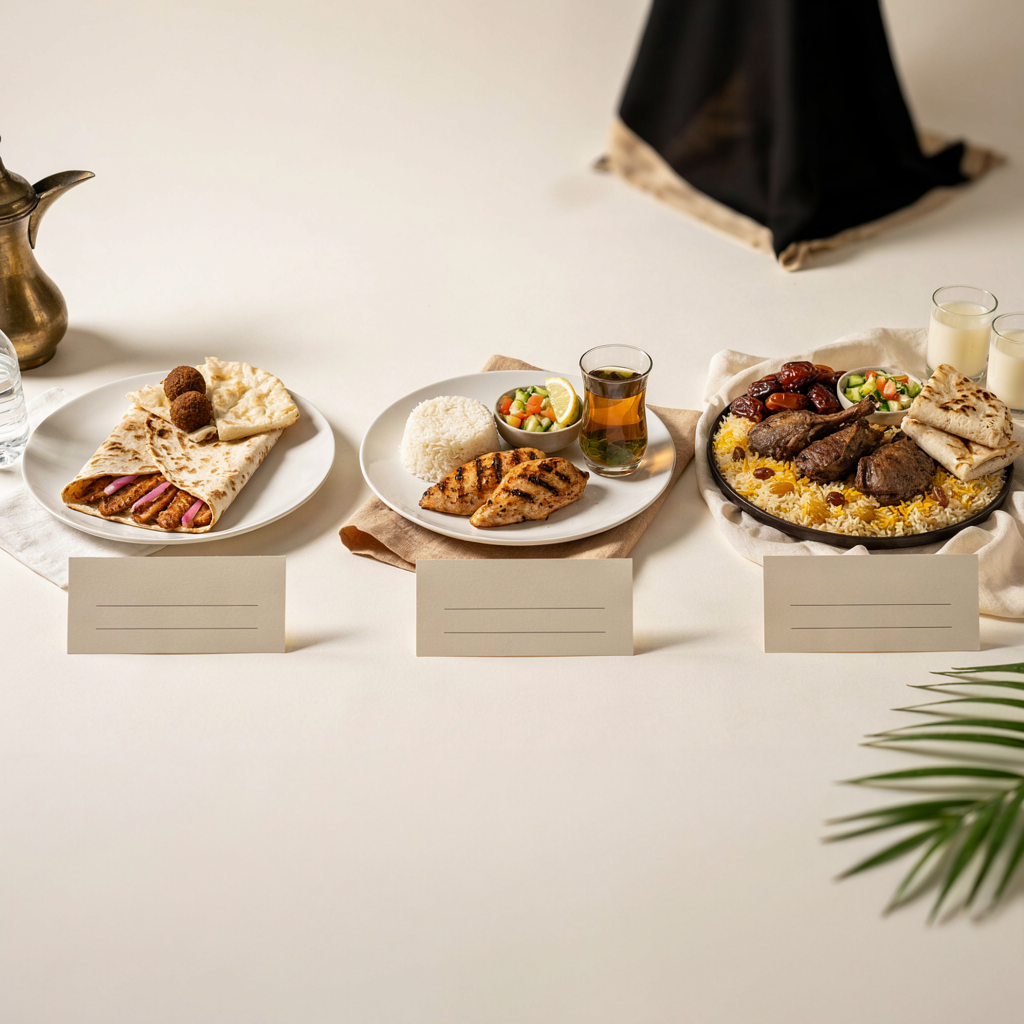
Madinah offers a similar range.
Current city-price data suggests an inexpensive meal is commonly around SAR 15–30, while a fast-food combo tends to be around SAR 30.
A meal for two at a mid-range restaurant may be roughly SAR 80–180, depending on the restaurant.
Madinah can feel slightly different from Makkah because many pilgrims spend more time walking around the streets surrounding Masjid an-Nabawi, where there is a huge variety of Pakistani, Indian, Bangladeshi, Turkish, Arab and international food.
Typical Madinah Food Budget
| Type of Food | Approximate Cost |
| Simple breakfast | SAR 8–20 |
| Falafel / sandwich | SAR 5–15 |
| Rice and chicken | SAR 15–30 |
| Fast-food meal | SAR 25–40 |
| Coffee | SAR 7–15 |
| Restaurant meal | SAR 25–60+ per person |
| Hotel buffet | SAR 60–150+ |
| Fresh juice | SAR 5–15 |
One thing I enjoyed about Saudi Arabia is the sheer variety.
You can be walking back from the mosque and find food from almost every part of the Muslim world within a few streets.
That in itself reflects something beautiful about Hajj and Umrah.
People arrive from everywhere, carrying their languages, cultures and food traditions, but all of them have travelled for the same reason.
Food Near the Haram Is Usually More Expensive
This is probably the most useful budgeting lesson.
Location matters.
The closer you get to Masjid al-Haram in Makkah or Masjid an-Nabawi in Madinah, the more convenient everything becomes. That convenience often carries a higher price. If you are tired after Tawaf or Salah and simply want to eat before returning to your room, paying a few extra Riyals may be completely worthwhile. You are not travelling to Saudi Arabia to spend your entire pilgrimage hunting for the cheapest meal. At the same time, eating every meal inside premium hotel restaurants can dramatically increase your spending.
A good balance is:
- Eat simple local meals most days.
- Use food courts when convenient.
- Have an occasional nicer restaurant meal.
- Keep snacks and fruit in your hotel room.
- Use hotel breakfast if it is included.
That keeps costs sensible without making food another source of stress.
My Experience of Food During the Pilgrimage
Something changes in the way you think about food during Hajj. At home, we often plan meals around enjoyment. What do I fancy tonight? Which restaurant should we try? During the intense days of Hajj, especially around Mina, Arafat and Muzdalifah, food becomes much more practical.
You begin thinking:
Have I eaten enough?
Am I drinking enough water?
What can I carry easily?
Will this give me enough energy for the walking ahead?
There were moments when a simple bottle of water, dates or a basic meal felt far more valuable than an expensive restaurant dinner.
Hajj teaches you that hunger and comfort are relative.
Sometimes a meal tastes special not because it is expensive, but because you have been walking for hours, you are exhausted, and Allah has provided something for you exactly when you need it.
That is one of the lessons I carried home with me.
Cheap Food Options in Makkah and Madinah
You do not need to eat fast food every day to save money.
Local restaurants can often provide much better value.
Shawarma
One of the easiest inexpensive meals.
Chicken or meat shawarma is available almost everywhere.
A simple shawarma may cost around SAR 5–15, depending on size and location.
Two shawarmas with a drink can make a perfectly adequate meal for many pilgrims.
Falafel
Falafel sandwiches are cheap, filling and widely available.
They are particularly useful for breakfast or a light meal.
Rice and Chicken
Saudi Arabia has excellent rice dishes.
You will commonly see:
- Kabsa
- Mandi
- Bukhari rice
- Grilled chicken with rice
These meals are filling and often generous enough to share.
A rice-and-chicken meal from a simple local restaurant may cost roughly SAR 15–30, while larger family portions cost more.
Pakistani and Indian Restaurants
For UK pilgrims, these can feel very familiar.
Around Makkah and Madinah you will find restaurants serving:
- Biryani
- Daal
- Curry
- Chapati
- Naan
- Chicken karahi
- Kebabs
They can offer excellent value, particularly if you are travelling as a family and sharing several dishes.
Bakeries
Never overlook bakeries.
They are useful for:
- Croissants
- Bread
- Cheese pastries
- Za’atar
- Pizza slices
- Sandwiches
A bakery breakfast can cost far less than eating inside a hotel.
What About ALBAIK?
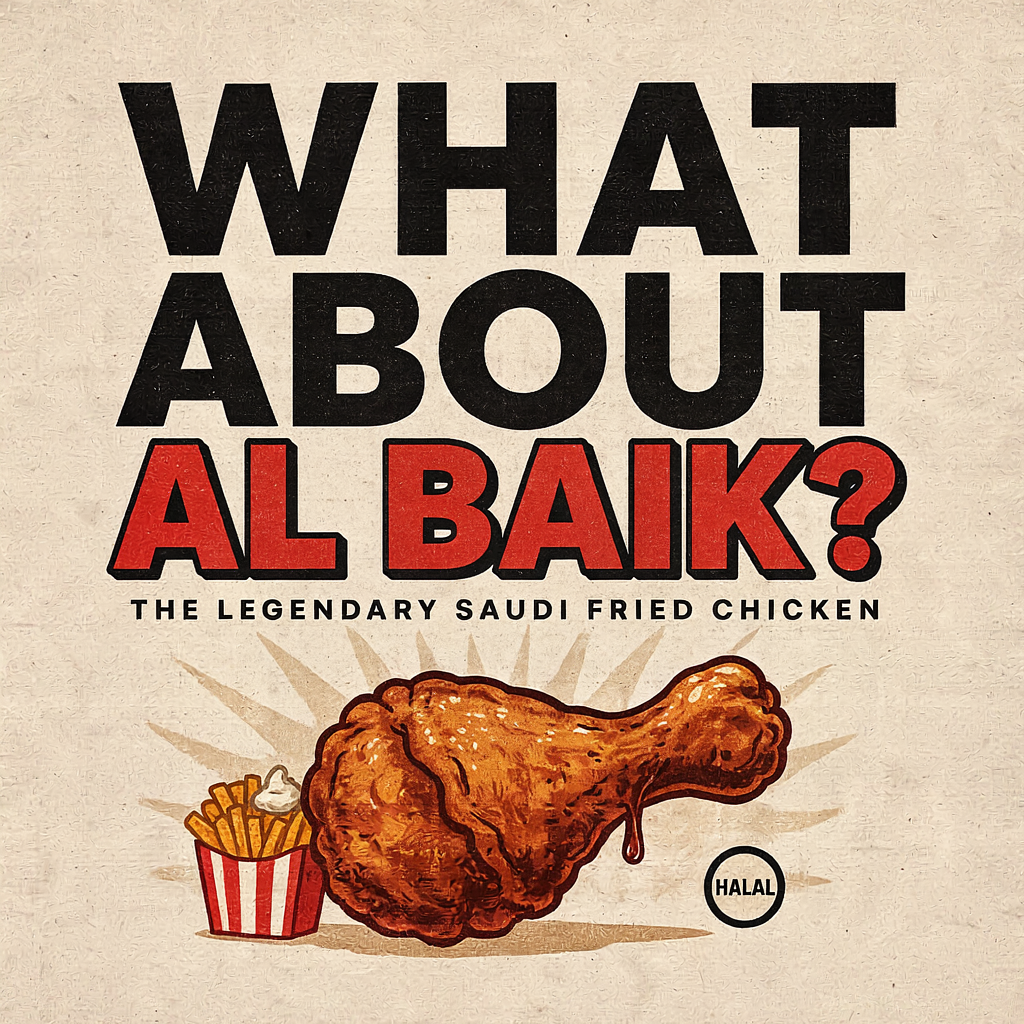
You cannot really write a pilgrim food guide without mentioning ALBAIK.
For many people visiting Saudi Arabia, it has almost become part of the travel experience.
ALBAIK is a Saudi fast-food chain best known for fried chicken, chicken fillets, nuggets, seafood and sandwiches. Its official menu includes chicken meals, burgers, nuggets and side dishes.
It is popular partly because it offers relatively affordable food compared with many international chains.
Depending on what you order, an individual meal can often stay within a modest pilgrim budget.
The challenge is sometimes the queue.
During busy pilgrimage periods, certain branches become extremely crowded.
My advice?
Try it.
But do not spend an hour of precious Makkah time standing in a queue simply because social media told you that you must.
There is plenty of good food in Saudi Arabia.
Fast Food in Makkah and Madinah
International chains are easy to find.
Depending on location, you may see brands such as:
- McDonald’s
- KFC
- Burger King
- Pizza Hut
- Domino’s
- Subway
- Starbucks
A typical international fast-food combo in Saudi Arabia is around SAR 25–35, with current city data showing roughly SAR 28 in Makkah and SAR 30 in Madinah.
For a single traveller, that may be reasonable.
For a family of five eating fast food twice a day, it becomes expensive surprisingly quickly.
For example:
Five meals × SAR 30 = SAR 150
Twice daily:
SAR 300 per day
Over ten days:
SAR 3,000
This is why family budgeting matters more than the price of one meal.
Money Exchange in Saudi Arabia
How Much Should You Budget Per Day for Food?
I would divide pilgrims into three broad budgets.
Budget Traveller: SAR 40–70 Per Person Per Day
This could include:
- Simple breakfast
- Local rice or shawarma lunch
- Light dinner
- Supermarket snacks
- Water
This works particularly well if your hotel includes breakfast.
Comfortable Budget: SAR 80–150 Per Person Per Day
This gives you much more flexibility.
You can combine:
- Hotel or café breakfast
- Restaurant lunch
- Fast food
- Coffee
- Snacks
- Occasional delivery
For many independent Umrah pilgrims, I think this is a reasonable planning range.
Higher / Hotel Dining Budget: SAR 150–300+ Per Person Per Day
If you prefer:
- Hotel buffets
- Premium restaurants
- Coffee shops
- Desserts
- Room service
- Frequent food delivery
your costs can rise quickly.
There is nothing wrong with enjoying good food.
The point is simply to understand the budget before travelling.
Family Food Budget for Umrah
Families should calculate food costs separately rather than taking advice designed for solo travellers.
For example, a family of five averaging SAR 80 each per day would spend:
SAR 400 per day
Over ten days:
SAR 4,000
That is a meaningful part of the Umrah budget.
But you can reduce this considerably when:
- Breakfast is included
- Children share meals
- You buy supermarket snacks
- You eat local food
- You share rice dishes
- You avoid premium restaurants every day
Family meals such as mandi or kabsa can often provide much better value than buying five separate Western-style meals.
Should You Book a Hotel With Breakfast?
For many pilgrims, yes.
Breakfast-inclusive accommodation can be extremely convenient.
You wake up, eat properly and then begin your day without immediately searching for a restaurant.
This can be particularly valuable for:
- Families with children
- Elderly pilgrims
- People with medication schedules
- Anyone staying very close to the Haram
But compare the actual cost.
Sometimes a hotel charges substantially more for breakfast, and nearby cafés can provide breakfast for much less.
Do not assume “breakfast included” automatically means better value.
Supermarkets Can Save You a Lot of Money
One of the first things I recommend after settling into your hotel is locating a nearby supermarket or grocery shop.
Stock your room with simple items:
- Bottled water
- Bananas
- Apples
- Dates
- Yogurt
- Bread
- Milk
- Juice
- Biscuits
- Nuts
- Crisps
- Breakfast items
This is particularly useful when travelling with children.
It also means you do not need to buy something from a restaurant every time somebody says:
“I’m hungry.”
A simple hotel-room food supply can save money and time.
Food Delivery Apps in Saudi Arabia
Food delivery can be extremely convenient when you return to the hotel exhausted.
You may encounter services such as:
- HungerStation
- Jahez
- ToYou
- Careem
Availability and delivery zones change, so check the apps when you travel.
Delivery is particularly helpful after a long day when nobody in the family wants to walk back outside.
However, watch the final checkout price.
Small additions such as:
- Delivery fees
- Service charges
- Minimum-order requirements
can make delivery noticeably more expensive than collecting food yourself.
Use delivery for convenience, not automatically for every meal.
Food During Hajj: Budgeting Works Differently
Hajj food arrangements depend heavily on your package.
During the main Hajj days, organised packages usually include catering at various stages.
You may therefore spend far less on food than during ordinary days in Makkah or Madinah.
But you should still carry some personal items.
I would recommend keeping:
- Dates
- Nuts
- Energy bars
- Small biscuits
- Electrolyte sachets
- Water when possible
The heat and walking can reduce your appetite.
That does not mean your body does not need fuel.
During Hajj, eating becomes part of looking after the body Allah has entrusted to you.
Hydration Matters More Than Fancy Food
This deserves its own section.
In Saudi heat, especially during Hajj, hydration becomes far more important than choosing the perfect restaurant.
Drink regularly.
Do not wait until you feel severely thirsty.
Zamzam is readily available around the holy mosques, and drinking it is one of the blessings of being there.
For ordinary bottled water from shops, prices are generally low, although location affects cost.
Carry water when travelling away from the Haram, especially during longer journeys and hot weather.
Is Food More Expensive During Ramadan?
It can be.
Ramadan is one of the busiest periods for Umrah, especially during the final ten nights.
High demand can affect:
- Hotel prices
- Restaurant queues
- Delivery times
- Buffet pricing
- Availability
Many hotels also offer special Iftar and Suhoor buffets.
These can be convenient but significantly more expensive than ordinary meals.
If you are travelling during Ramadan, budget separately for Suhoor and Iftar rather than applying an ordinary daily food estimate.
What About Hajj Season?
Hajj presents a different situation again.
Millions of pilgrims are concentrated in a relatively small geographical area.
Your official package may provide most meals, but shops and food outlets can become exceptionally busy.
Do not plan Hajj food the way you would plan a normal holiday.
Convenience and hydration matter more.
Saudi VAT and Restaurant Prices
Saudi Arabia applies a 15% standard VAT rate where applicable.
When comparing prices, look at the final amount rather than assuming the menu figure is your complete cost.
Registered businesses must account for VAT according to Saudi rules.
For your personal travel budget, simply leave some flexibility.
There is little value in calculating a ten-day food budget down to the last Riyal.
Common Food-Budget Mistakes Pilgrims Make
Eating only in the hotel complex
It is convenient but often significantly more expensive.
Walk a little farther when you have the time and energy.
Buying coffee several times every day
One coffee does not look expensive.
Five coffees over several days do.
Ordering too much food
Saudi restaurant portions can be generous.
Order carefully first, particularly when eating as a family.
You can always order more.
Ignoring supermarket food
Fruit, yogurt, bread and snacks can cover many small meals.
Depending entirely on fast food
It is familiar but not necessarily the cheapest option.
Spending too much time searching for cheap food
Saving SAR 5 is not worth losing an hour you could have spent in Masjid al-Haram.
There has to be balance.
A Sample Daily Food Budget
Here is a realistic example for one adult:
| Meal | Example | Estimated Cost |
| Breakfast | Tea + eggs/bread | SAR 12 |
| Lunch | Chicken and rice | SAR 22 |
| Snack | Fruit / drink | SAR 8 |
| Dinner | Shawarma + drink | SAR 15 |
| Coffee | One café coffee | SAR 12 |
| Total | SAR 69 |
You could easily spend less.
You could just as easily spend twice this amount.
The important thing is knowing what style of travel suits you.
A Simple Lesson Hajj Taught Me About Food
One of the things pilgrimage does is quietly rearrange your priorities.
At home, we can spend a lot of time thinking about food.
During Hajj, particularly when you are tired, hot and surrounded by millions of other pilgrims, something as simple as cold water or a few dates can feel like an incredible blessing.
You become more grateful for very ordinary things.
Water.
Shade.
A place to sit.
A simple meal.
Perhaps that is one of the quieter lessons of pilgrimage.
You travel looking for extraordinary spiritual experiences, but sometimes Allah teaches you gratitude through the most ordinary parts of the journey.
A simple meal eaten with gratitude can become more memorable than an expensive meal eaten without thought.
FAQs
How much does food cost per day in Makkah?
For a budget-conscious pilgrim, around SAR 40–70 per person per day can be achievable by eating local food and keeping supermarket snacks in the hotel.
A more comfortable budget would be around SAR 80–150 per person per day.
If you regularly eat at hotel restaurants, premium cafés and international chains, your daily food cost can rise beyond SAR 150 quite easily.
How much does food cost per day in Madinah?
The range is broadly similar to Makkah.
Simple local food can keep your daily spending relatively low, while hotel restaurants and premium cafés increase the cost considerably.
Budget around SAR 50–100 per adult for normal everyday eating and adjust according to your own preferences.
Is food expensive near Masjid al-Haram?
It can be more expensive than restaurants located farther away.
Premium hotel complexes and restaurants with extremely convenient locations naturally charge more.
However, plenty of affordable food can still be found around central Makkah if you are willing to walk a little.
Is Madinah cheaper than Makkah for food?
There is no dramatic difference overall.
Current price data actually shows an inexpensive restaurant meal at around SAR 16 in Makkah and about SAR 20.50 in Madinah, although individual restaurants vary considerably.
Location and restaurant type matter more than the difference between the two cities.
How much is a fast-food meal in Saudi Arabia?
A typical international fast-food combo is currently around SAR 25–35.
Current 2026 data reports approximately SAR 28 in Makkah and SAR 30 in Madinah.
Local fast-food restaurants may be cheaper.
How much spending money should a family take for food?
Start with your number of travellers and length of stay.
For example, five people averaging SAR 75 per person per day would need approximately SAR 375 daily.
Over ten days that would be SAR 3,750.
Reduce this when breakfast and other meals are included in your package.
Can you eat cheaply in Makkah?
Absolutely.
Local rice dishes, shawarma, falafel, bakeries and supermarkets provide plenty of inexpensive options.
You do not need to eat in hotel restaurants every day.
Is ALBAIK cheap in Saudi Arabia?
ALBAIK is generally considered a value-oriented fast-food option and offers chicken meals, burgers, nuggets, seafood and side dishes.
Exact prices change by product and over time, so check the current menu when visiting.
It can be particularly popular around pilgrimage areas, which sometimes means long queues.
Are meals included in Hajj packages?
Most organised Hajj arrangements provide catering during at least part of the pilgrimage, but exactly what is included depends on your package.
Check carefully with your Hajj provider before travelling.
Ask specifically about breakfast, Mina meals, Arafat catering and meal arrangements before and after the main Hajj days.
Should I take food from the UK for Umrah?
You generally do not need to carry large quantities of food.
Makkah and Madinah have supermarkets, restaurants and familiar international products.
However, bringing a few favourite snacks can be useful, particularly for children, elderly travellers or anyone with specific dietary requirements.
Miqat’s Suggested Food Budget
For a normal Umrah trip, I would use this as a starting point:
Budget: SAR 50–70 per adult per day
Comfortable: SAR 80–120 per adult per day
Flexible / premium: SAR 150+ per adult per day
Then adjust for:
- Children
- Hotel breakfast
- Ramadan
- Package meals
- Food preferences
- Number of restaurant meals
Do not forget an emergency margin.
Final Reflection
Food is necessary for the journey, but it should not become the journey.
Enjoy Saudi food.
Try the local restaurants.
Have the ALBAIK.
Drink the coffee.
Take your family somewhere nice if you want to.
But when you are in Makkah, remember that you can eat at another restaurant tomorrow.
You may never again have that exact hour sitting inside Masjid al-Haram looking towards the Ka’bah.
And in Madinah, another meal can wait.
Another quiet moment sending salam to the Prophet ﷺ is much harder to replace.
Plan your food budget well enough that money does not distract you, eat enough to keep your body strong for worship, and then give the rest of your attention to the reason Allah allowed you to make the journey.
May Allah place barakah in the provision of every pilgrim, keep them healthy and strong throughout their journey, accept their Hajj and Umrah, and allow all of us to return to Makkah and Madinah again.
Ameen.
SIM Cards in Saudi Arabia: The Complete Guide for Hajj & Umrah