For many pilgrims, preparing for Hajj or Umrah begins with the rituals.
You learn about Ihram. You read about Miqat. You watch videos explaining Tawaf and Sa’i. You make lists of duas and start thinking about the moment you will finally see the Ka’bah.
But there is another side of the journey that deserves preparation too.
How will you get from the airport to Makkah?
Should you arrive in Jeddah or Madinah?
Will your phone work when you land?
Should you buy a Saudi SIM or use an eSIM?
How will you travel between Makkah and Madinah?
Will you need cash?
Which apps should already be on your phone?
And what happens when you walk out of your hotel in Makkah and suddenly cannot remember which direction you came from?
These might sound like ordinary travel questions, but during Hajj or Umrah, solving the practical side of the journey gives you more space to concentrate on why you came.
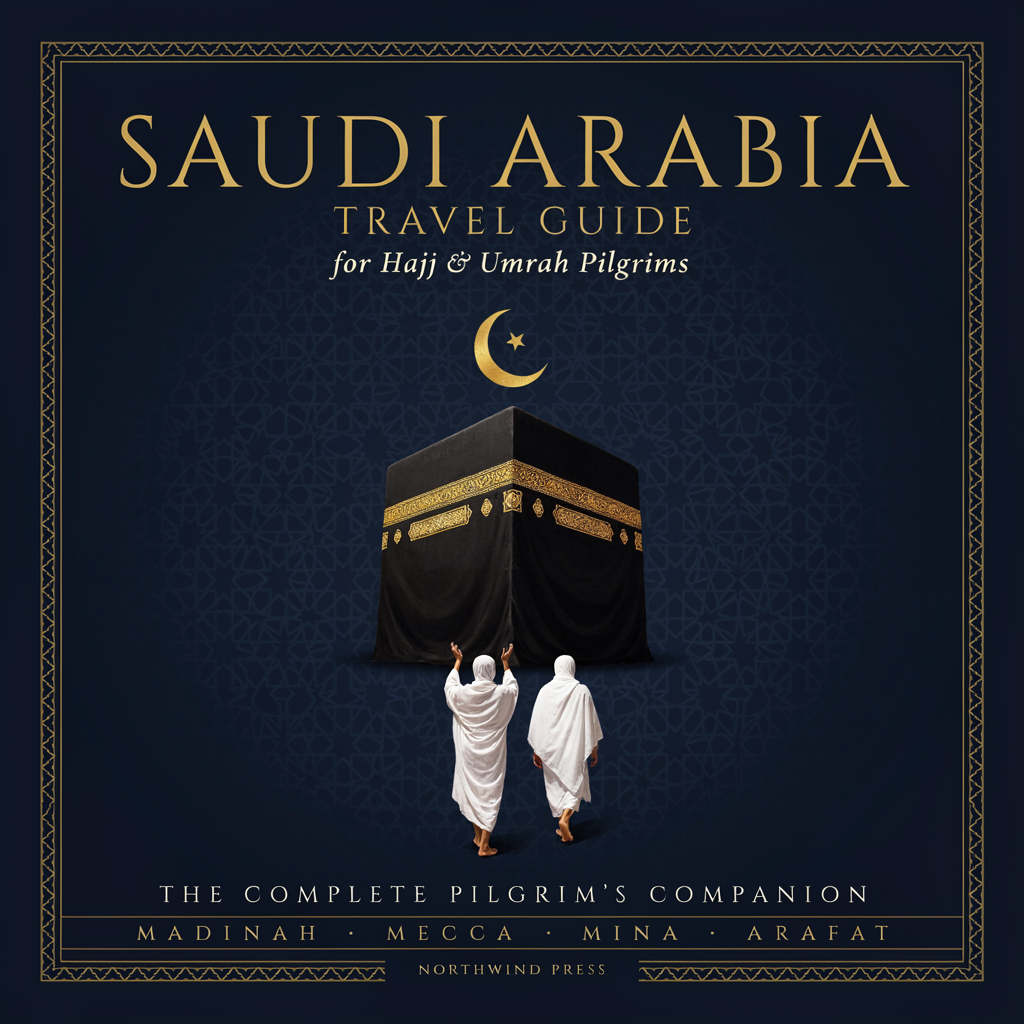
This Saudi Arabia travel guide for Hajj and Umrah pilgrims is Miqat’s starting point for that practical side of the journey.
It isn’t designed to replace our detailed guides. Instead, think of it as your map.
When you need more information about a particular part of travelling in Saudi Arabia, follow the relevant Miqat guide and go deeper.
The easier you make the practical side of your journey, the more attention you can give to the spiritual side.
Saudi Arabia Travel Guide for Hajj & Umrah
Before You Fly to Saudi Arabia
A good Saudi journey starts before you reach the airport.
There are several things I would rather sort out at home than try to fix after landing.
Your exact requirements will depend on your nationality, visa type, pilgrimage, time of year and current Saudi regulations. Because these rules can change, don’t rely on an old YouTube video or somebody else’s journey from several years ago.
Check current official requirements before departure.
Saudi Arabia’s official Nusuk Umrah platform, supervised by the Ministry of Hajj and Umrah, currently provides access to Umrah-related services and packages, including combinations of visas, accommodation, transportation, flights and other services.
Before travelling, I would check:
- Passport and visa requirements
- Flight details
- Accommodation confirmations
- Current health requirements
- Travel insurance
- Medication and prescriptions
- Airport transfer arrangements
- Ihram and Miqat requirements
- Mobile connectivity
- Bank/card travel settings
- Essential Saudi apps
Save copies of your important documents on your phone, but don’t depend entirely on the phone.
A printed copy of your hotel details, flight information and emergency contacts takes almost no room.
Jeddah or Madinah: Where Should You Arrive?
This is one of the first practical decisions many Umrah pilgrims face.
There isn’t one correct answer for everybody.
Arriving Through Jeddah
Jeddah is a common gateway for pilgrims travelling towards Makkah.
If your plan is to travel from Jeddah towards Makkah to perform Umrah, however, your journey towards the Miqat needs to be understood before you land.
Don’t wait until Jeddah Airport to begin learning about Ihram.
This is where our existing What Is Miqat? Complete Guide becomes particularly important. You already have a strong Miqat content cluster on Miqat, Dhul Hulayfah, Al-Juhfah, Qarn al-Manazil, Yalamlam and Dhat Irq.
Read:
What Is Miqat? Complete Guide
And, as we build the Saudi Travel cluster:
Jeddah Airport Guide for Umrah Pilgrims
Jeddah Airport to Makkah: Train, Taxi or Transfer?
Arriving Through Madinah
Some pilgrims prefer beginning their journey in Madinah.
There can be something beautiful about this route.
You arrive, settle into Saudi Arabia, recover from your flight and spend time in Madinah before travelling towards Makkah for Umrah.
When it is eventually time to leave Madinah for Makkah, pilgrims performing Umrah can prepare for Ihram before passing the relevant Miqat.
Miqat already has a dedicated article about Masjid Dhul Hulayfah, which is an important supporting guide for this journey.
Eventually this travel pillar should also link to:
Madinah Airport Guide
Madinah to Makkah for Umrah
Jeddah First or Madinah First for Umrah?
Getting Connected: SIM Card or eSIM?
One of the first practical things many travellers think about after landing is internet access.
Your phone can become your map, communication device, travel folder and transport assistant all at once.
You may need data for:
- Maps and navigation
- Nusuk and pilgrimage services
- Transport bookings
- Train information
- Airline updates
- Hotel directions
- Translation
- Family communication
- Digital documents
You have two broad options.
Physical Saudi SIM
A physical SIM can be a straightforward choice if your phone accepts one and you prefer having a local Saudi mobile connection.
The details of available providers, packages and prices can change, so this isn’t something I want to freeze permanently inside the main Saudi Travel pillar.
Instead, Miqat has a dedicated living guide:
SIM Cards in Saudi Arabia: The Complete Guide for Hajj & Umrah
That article already exists and should remain the place where we update providers, packages and current practical information.
eSIM
An eSIM can be particularly convenient because you may be able to arrange connectivity before travelling.
For some travellers, landing with mobile data already working removes one small job from arrival day.
But check whether your phone supports eSIM, what coverage the particular provider uses, how much data you receive and whether you actually require a Saudi phone number.
We’ll cover that separately in:
Physical SIM vs eSIM for Saudi Arabia
Apps I Would Prepare Before Leaving Home
Don’t wait until you land to turn your phone into a travel tool.
Install the apps you expect to use and, importantly, log into them before departure.
Depending on your circumstances, useful categories include:
Nusuk / official pilgrimage services
Important pilgrimage-related services are increasingly digital. The official Nusuk Umrah platform is overseen by Saudi Arabia’s Ministry of Hajj and Umrah.
Maps
Save your hotels and important locations before travelling.
WhatsApp
Very useful for family and group communication.
Transport apps
Useful for arranging journeys when appropriate.
Airline app
Helpful for check-in, boarding information and flight changes.
Banking app
Make sure you can access it abroad and understand your bank’s security procedures.
Translation tools
Arabic isn’t required for every interaction, but translation can occasionally be useful.
We will maintain these recommendations in the dedicated Best Apps for Hajj and Umrah Pilgrims guide because apps and Saudi digital systems can change.
Getting From Jeddah to Makkah
After a long flight, this is not the moment when you want to begin researching transport.
Know your plan before landing.
Depending on your circumstances and current services, options may include:
- Pre-arranged group transport
- Hotel or package transfer
- Taxi
- Ride-hailing
- Rail
- Private transfer
Each has advantages.
A family with several suitcases may make a different decision from a solo traveller with one small bag.
An elderly pilgrim may value door-to-door convenience more than the lowest possible price.
Someone travelling during a busy pilgrimage period should also think about crowds and additional journey time.
We will cover the options in depth in:
Jeddah Airport to Makkah: Train, Taxi or Transfer?
The purpose of this pillar is simply to make sure you ask the question before you land.
Travelling Between Makkah and Madinah
Makkah and Madinah are the two cities around which many pilgrimage itineraries revolve.
You may travel between them by rail, road transport, private transfer or as part of an organised package.
The right choice depends on:
- Budget
- Luggage
- Group size
- Age and mobility
- Hotel locations
- Departure times
- Your wider pilgrimage itinerary
Don’t compare transport purely by ticket price.
Door-to-door journey time matters.
Getting four people and several suitcases from a hotel to a station, then from another station to the next hotel, can change the calculation considerably.
Our dedicated Makkah to Madinah: Best Ways to Travel guide will compare these options properly.
Moving Around Makkah
Makkah deserves its own transport mindset.
Distances on your phone can be misleading.
A hotel that looks reasonably close to Masjid al-Haram on a map may involve slopes, busy crossings, crowds or a route that feels much longer after Tawaf and Sa’i.
Walking is a huge part of many pilgrimage journeys.
That’s why when choosing accommodation, I would look beyond the advertised distance from the Haram.
Consider:
- Actual walking route
- Hills and gradients
- Elderly relatives
- Wheelchair users
- Heat
- Crowds
- Hotel shuttle availability
- Which side of the Haram you regularly need
Taxis and ride-hailing services can be useful for some journeys, but congestion and access restrictions can affect travel around very busy periods.
This deserves a full guide of its own:
Travelling Around Makkah: Walking, Taxi, Bus and Transport Guide
Moving Around Madinah
Madinah can feel very different.
Many pilgrims spend much of their time around Masjid an-Nabawi, but you may also travel to places such as Masjid Quba, Uhud and other historically significant locations.
Again, avoid turning the visit into a race to tick off locations.
Transport should support your time in Madinah, not dominate it.
Our Madinah Travel Guide will eventually connect to local transport, ziyarah and practical city guides.
One Small Travel Habit That Can Save a Lot of Stress
Whenever you arrive at a new hotel, do three things.
Save it on your map.
Take a photograph of the entrance.
Take a screenshot showing the address.
It sounds almost too simple to mention.
But Makkah can be overwhelming when you first arrive.
Masjid al-Haram is enormous. Crowds move constantly. You can enter through one route and emerge somewhere that doesn’t immediately look familiar.
If travelling with family, agree on a meeting point as well.
Don’t assume everyone will always remain together.
During pilgrimage, simple systems often work better than complicated ones.
Money in Saudi Arabia
Saudi Arabia uses the Saudi riyal (SAR).
Rather than trying to prescribe one payment method for every pilgrim, I recommend having some flexibility.
Cards and electronic payments can be very useful, but having access to some cash can also be sensible.
Before travelling, check:
- Your bank’s foreign transaction fees
- ATM withdrawal fees
- Exchange rates
- Whether your cards will work abroad
- Your daily withdrawal limits
- Whether your bank requires travel notification
You can also read:
How Much Does Food Cost in Makkah and Madinah?
That article is already part of Miqat’s published library and can help pilgrims begin estimating everyday spending.
Food While Travelling in Saudi Arabia
You can spend very differently on food depending on where and how you eat.
There are inexpensive meals, takeaway options, international chains, hotel restaurants and more expensive sit-down dining.
For families, food can become a meaningful part of the daily budget.
But there is another consideration: energy.
During Hajj and Umrah, particularly on demanding days, the most exciting meal isn’t necessarily the best meal.
Sometimes you simply need something familiar, easy to digest and reasonably close to your hotel.
Keep water with you and pay attention to hydration, particularly in hot conditions.
For detailed budgeting, use the existing How Much Does Food Cost in Makkah and Madinah? guide.
Travelling With Family
Family pilgrimage is beautiful, but it changes travel planning.
When I travelled for Hajj with my family, there were five of us together.
That changes small decisions.
A short walk for one person can feel very different when several people are trying to remain together in a crowd.
One person may need the toilet.
Another may be tired.
Someone stops.
Someone else continues walking without realising.
And suddenly the group is split.
We often imagine the major rituals when preparing for pilgrimage, but ordinary coordination matters too.
Before entering busy areas, agree:
If we become separated, where do we meet?
Make sure everyone knows:
- Hotel name
- Hotel location
- Group contact number
- Meeting point
- What to do if their phone dies
This becomes even more important when travelling with children or elderly relatives.
Travelling With Elderly Pilgrims
If you are travelling with elderly parents or relatives, plan around their pace, not yours.
Something that looks easy on Google Maps may feel completely different after a long flight, in strong heat or after several days of walking.
Think about:
- Wheelchair availability
- Hotel distance
- Elevators
- Rest stops
- Medication
- Hydration
- Accessible transport
- Luggage
- Journey timing
Sometimes paying slightly more for a more convenient hotel or transport arrangement can dramatically improve the experience.
Comfort is not the purpose of pilgrimage, but unnecessary hardship doesn’t need to be manufactured either.
What If You Get Lost?
First: don’t panic.
Save your accommodation location before leaving.
Carry identification and essential contact information.
If travelling with a group, save the group leader’s number.
Take photographs of useful landmarks.
And if you’re responsible for someone vulnerable, make sure they carry the information rather than assuming you will always be beside them.
We will build this into a dedicated:
What to Do If You Get Lost in Makkah
This is exactly the sort of practical article I want Miqat to become known for.
Not only explaining rituals, but answering the questions pilgrims discover once they are actually there.
Travel During Hajj Is Different
Hajj travel shouldn’t be treated exactly like an ordinary Umrah trip.
During the Hajj period, movement between Mina, Arafat, Muzdalifah and Jamarat operates within a highly organised pilgrimage environment.
Your Hajj package, group arrangements and current Saudi systems matter enormously.
Don’t assume that because you travelled independently around Makkah before Hajj, the same flexibility will apply throughout the Hajj days.
Follow your authorised Hajj arrangements and official instructions.
And prepare mentally for waiting.
There may be queues.
Transport may take longer than expected.
Plans can change.
Crowds can slow everything down.
One lesson pilgrimage teaches surprisingly well is that not everything will happen according to your personal timetable.
Your Phone Is Useful — But Don’t Let It Own the Journey
There is something slightly strange about pilgrimage in the smartphone era.
The phone can be incredibly useful.
Maps.
Nusuk.
Tickets.
Messages.
Hotel information.
Photos.
Duas.
Transport.
Everything seems to live inside it.
But there are also moments when putting it away matters.
When I first saw the Ka’bah during Hajj, I wasn’t thinking about whether my phone had signal.
I was standing there with my brothers, five of us from the family, seeing something with our own eyes that we had seen in photographs throughout our lives.
There were tears.
There weren’t many words.
Eventually a security officer brought us back to what was happening around us:
“Haji, Haji… move.”
Other pilgrims needed to pass.
Some moments don’t need to be turned immediately into content.
Sometimes you need to simply be there.
Use technology to make the journey easier.
But don’t allow the screen to become the journey.
Common Saudi Travel Mistakes Pilgrims Make
Many practical problems can be avoided with relatively simple preparation:
- Landing without understanding Ihram and Miqat requirements
- Not arranging airport transport
- Assuming mobile data will automatically work
- Installing important apps only after arrival
- Forgetting bank charges
- Depending completely on cash
- Depending completely on cards
- Choosing a hotel based only on straight-line distance
- Wearing new shoes for the first time in Saudi Arabia
- Carrying too much during day trips
- Not saving the hotel location
- Having no family meeting point
- Underestimating walking
- Packing every possible item instead of buying basics locally when needed
- Trying to fit too much into each day
- Not allowing elderly relatives enough rest
None of these sounds dramatic.
But avoiding several small problems can make the overall pilgrimage noticeably calmer.
Build Your Saudi Journey From Here
This Saudi Travel pillar will become the parent guide for Miqat’s practical Saudi content.
Airports & Arrival
Jeddah Airport Guide for Umrah Pilgrims
Madinah Airport Guide for Pilgrims
Arriving in Saudi Arabia for Umrah: What Happens Next?
Saudi Immigration for Umrah Pilgrims
Transport
Jeddah Airport to Makkah
Makkah to Madinah
Haramain High-Speed Railway Guide
Travelling Around Makkah
Travelling Around Madinah
Careem in Saudi Arabia
Connectivity & Technology
SIM Cards in Saudi Arabia for Hajj and Umrah
Physical SIM vs eSIM
Best Apps for Hajj and Umrah
Nusuk Guide
Using Google Maps in Makkah and Madinah
Money & Everyday Travel
Money Exchange in Saudi Arabia
Cash vs Card in Saudi Arabia
Using ATMs in Saudi Arabia
How Much Does Food Cost in Makkah and Madinah?
Destination Guides
Makkah Guide for Hajj and Umrah Pilgrims
Madinah Guide for Hajj and Umrah Pilgrims
As these supporting guides are published, this page should continuously become more useful.
That is what makes it a pillar rather than simply another blog post.
Frequently Asked Questions
What is the best airport for Umrah?
Jeddah is a common gateway for pilgrims heading towards Makkah, while Madinah can be an excellent starting point for pilgrims who want to visit the city before travelling to Makkah.
Neither route is automatically best for everyone.
Consider flight prices, hotel itinerary, travel time, your family’s needs and — importantly — how your route affects Ihram and Miqat preparation.
Should I go to Makkah or Madinah first?
Both routes can work.
Starting in Madinah can give you time to settle into Saudi Arabia before travelling towards Makkah for Umrah. Starting through Jeddah can get you towards Makkah sooner.
If travelling towards Makkah to perform Umrah, make sure you understand the relevant Ihram and Miqat requirements before the journey.
Do I need a Saudi SIM card for Umrah?
Not necessarily.
Some pilgrims use roaming, others buy a Saudi physical SIM, and others arrange an eSIM.
The right option depends on your phone, data needs, length of stay, cost and whether you need a Saudi phone number.
Use Miqat’s SIM Cards in Saudi Arabia guide for current options rather than relying on old package information.
Do I need cash in Saudi Arabia?
It’s sensible to have more than one way to pay.
Cards and digital payments can be useful in many situations, while some cash provides flexibility.
Check your own bank’s overseas charges before travelling and read the Money Exchange in Saudi Arabia guide for more detailed preparation.
What apps should I download for Umrah?
Your exact requirements can change, but useful categories include official pilgrimage services, maps, messaging, transport, airline, banking and translation apps.
Nusuk is particularly relevant to modern pilgrimage planning and services. Saudi Arabia’s official Nusuk Umrah platform is overseen by the Ministry of Hajj and Umrah.
Download and log into important apps before leaving home.
Is it easy to travel between Makkah and Madinah?
There are multiple ways to travel between the two cities, and the best option depends on your circumstances.
Consider total journey time rather than simply ticket price. Luggage, hotel-to-station transport, children and elderly relatives can all affect which option is easiest.
We’ll compare these properly in Miqat’s dedicated Makkah-to-Madinah guide.
Can I use Google Maps in Makkah and Madinah?
Digital maps can be extremely useful for hotels, restaurants, shops and general navigation.
However, don’t depend on navigation alone around large mosque complexes and crowded areas.
Save your hotel, photograph its entrance and learn one or two nearby landmarks as a backup.
Is Saudi Arabia difficult for a first-time pilgrim to navigate?
The first day can feel overwhelming because almost everything is unfamiliar.
That feeling usually improves quickly.
Preparing your airport transfer, phone connection, hotel location, essential apps and basic transport plan before arrival removes many of the uncertainties.
How much money should I budget per day?
There isn’t a useful single figure for every pilgrim.
Accommodation arrangements, included meals, transport, shopping and family size all change the calculation.
Build your budget around essentials first, then add a separate allowance for shopping and optional activities.
Should I book Saudi transport before travelling?
For important journeys such as your initial airport transfer, arranging the journey beforehand can reduce stress, particularly for first-time pilgrims and families.
Other local journeys can often be arranged as needed.
During Hajj or especially busy pilgrimage periods, follow your authorised package arrangements and current official instructions rather than assuming normal travel conditions.
The Journey Is More Than Getting From A to B
Travel guides usually talk about airports, trains, taxis and hotels.
And Miqat will do that too.
Pilgrims need practical information.
But Saudi Arabia is different when your reason for travelling is Hajj or Umrah.
The airport isn’t simply an airport.
It is the beginning of something you may have waited years to experience.
The journey towards Makkah isn’t simply a transfer.
Somewhere along that road, you realise that the Ka’bah you have faced in salah thousands of times is becoming physically closer.
And Madinah isn’t simply another destination on an itinerary.
That is why I want Miqat’s Saudi travel guides to do two things at once:
help you travel confidently, while never allowing the logistics to overshadow why you travelled.
Plan well.
Keep things simple.
Be patient when plans change.
Look after the people travelling with you.
And leave room for the journey to affect you.
May Allah make your journey to Saudi Arabia safe and easy, protect you and your family throughout your travels, allow you to reach Makkah and Madinah in peace, and accept every sincere act of worship you perform there.
Ameen.