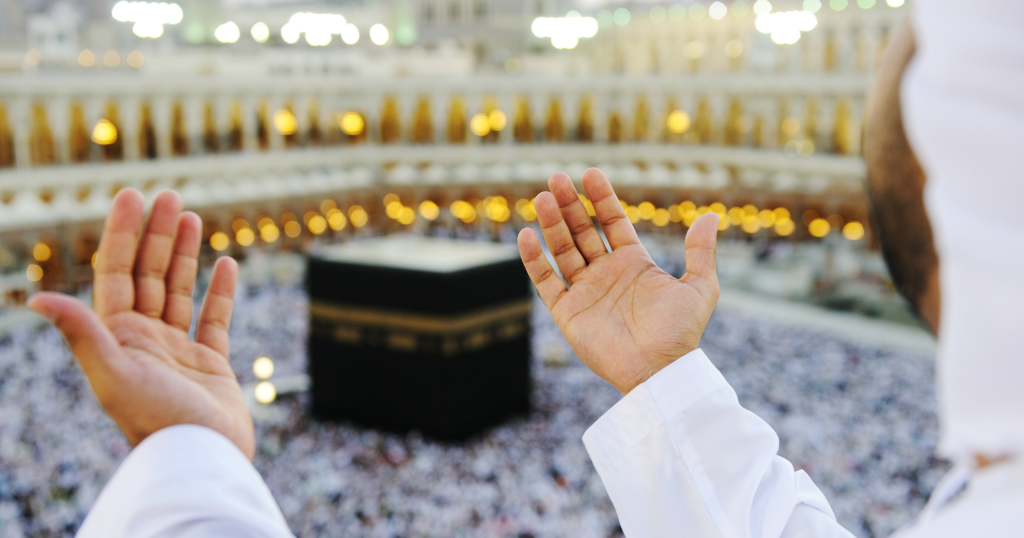
Planning your first Hajj or Umrah can feel overwhelming surprisingly quickly. At first, there is excitement. You are going to Makkah. You may visit Madinah. You will, insha’Allah, stand before the Ka’bah, make Tawaf, drink Zamzam and visit places you have heard about throughout your life.
Then the questions begin is where to start from:
Which visa do I need?
When do I wear Ihram?
What is the Miqat?
How much money should I take?
Which SIM card should I buy?
What should I pack?
How much walking will I actually do?
Should I fly to Jeddah or Madinah?
Which apps do I need?
And, perhaps most importantly:
How do I make sure I am spiritually prepared rather than simply travel prepared?
If that sounds familiar, you are in the right place.
Planning Your First Hajj or Umrah? Start Here
This page is the starting point for Miqat. You don’t need to read everything on this website before travelling. Instead, tell yourself where you are in your journey and start with the section that applies to you.
You don’t need to know everything today. You just need to know what your next step is.
First, Are You Going for Hajj or Umrah?
Hajj and Umrah share some rituals and take place in the same sacred city, but preparing for them is not exactly the same.
Hajj takes place during specific days of Dhul Hijjah and involves a much larger sequence of rituals, including Mina, Arafat, Muzdalifah and Jamarat.
Umrah is shorter and can generally be performed at different times of the year, subject to current Saudi regulations and the Hajj season.
So your first step is simple.
I Am Going for Hajj
Start with our Complete First-Time Hajj Guide.
That guide should become your main reference point for understanding the Hajj journey from preparation at home through to the days of Hajj themselves.
From there, Miqat will take you deeper into individual parts of the journey, including:
- Hajj Preparation Guide
- Hajj Packing List
- Physical Preparation for Hajj
- Spiritual Preparation for Hajj
- Mina Guide
- Arafat Guide
- Muzdalifah Guide
- Jamarat Guide
- Hajj Health Guide
- Hajj Dua List
If this is your first Hajj, don’t try to memorise every detail in one sitting.
Understand the overall journey first.
Then learn each stage.
I Am Going for Umrah
Start with our First Time Umrah Guide for Pilgrims.
This takes you from preparing at home through Ihram, Miqat, Tawaf, Sa’i and completing your Umrah.
After understanding the overall journey, you can use our more detailed guides for:
- What Is Ihram?
- Miqat Explained
- How to Enter Ihram When Flying
- How to Perform Tawaf
- How to Perform Sa’i
- Halq and Taqsir
- Common First-Time Umrah Mistakes
- Best Time to Perform Umrah
- Complete Umrah Packing List
This is a much easier way to prepare than opening twenty browser tabs and trying to piece together your journey from unrelated articles and social media videos.
What is Miqat?
Think of the miqat as the sacred threshold of the Haram. It is a boundary set by the Prophet Muhammad (peace be upon him) himself, marking where the journey of the heart shifts from ordinary travel to sacred worship. Once you pass these boundaries without ihram, you have technically committed a violation even if your plane was at 35,000 feet when it happened.
If You Have Already Booked, Start Here
Perhaps your flights and hotels are already booked.
Alhamdulillah.
Now your preparation changes from:
“Where should I go?”
to:
“Am I actually ready to go?”
This is where a proper pre-departure checklist becomes valuable.
Start with the Hajj and Umrah Preparation Checklist and work through your arrangements systematically.
Don’t rely on memory.
Check Your Travel Documents
Make sure you have checked your:
- Passport validity
- Saudi visa or relevant travel authorisation
- Flight confirmation
- Hotel reservations
- Transport arrangements
- Travel insurance
- Required health documentation
- Vaccination requirements
- Medication and prescriptions
- Emergency contact information
Keep important documents available digitally, but I also like the idea of carrying essential information offline.
Phones lose battery. Internet connections fail. Apps log people out.
A simple printed copy can sometimes be surprisingly useful.
Saudi entry, visa, health and pilgrimage requirements can change, so always verify current requirements through the relevant official authorities before travelling.
Don’t Prepare Only Your Suitcase
This deserves its own section because it is very easy to overlook.
There are two kinds of preparation for Hajj and Umrah.
There is the preparation everyone can see:
Flights.
Hotel.
Ihram.
Suitcase.
Money.
Vaccinations.
Phone.
Then there is the preparation nobody else can see.
Your intention.
Your tawbah.
Your duas.
Your relationship with Allah.
The people you may need to forgive.
The people from whom you may need to seek forgiveness.
The debts or responsibilities you should address.
The habits you hope to leave behind.
Hajj and Umrah shouldn’t begin when your aircraft takes off.
The journey of the heart can begin weeks or months beforehand.
Our Spiritual Preparation for Hajj and Spiritual Preparation for Umrah guides are designed to help with this side of the journey.
Leaving Soon? Concentrate on These Essentials
If your departure is only a few days or weeks away, this probably isn’t the time to read fifty articles.
Focus on the things that can materially affect your journey.
1. Packing
Start with the appropriate Hajj Packing List or Umrah Packing List.
Try to distinguish between something that is genuinely useful and something that might be useful.
There is a big difference.
Pilgrims often carry far more than they need.
You will find supermarkets, pharmacies and shops in Saudi Arabia. Your luggage doesn’t need to contain a solution for every possible scenario.
Comfortable footwear, essential medication, suitable clothing, Ihram essentials, chargers, travel documents and basic health items matter much more than filling every kilogram of baggage allowance.
2. Understand Ihram Before You Travel
Do not make the aircraft your classroom.
Learn what Ihram means, when you need to enter it and the restrictions that apply before departure.
This is particularly important if you are flying directly towards Jeddah before travelling to Makkah.
Read:
What Is Ihram?
followed by:
Miqat Explained: Where and When to Enter Ihram
and:
How to Enter Ihram When Flying to Saudi Arabia
For religious rulings specific to your circumstances, consult a knowledgeable and trusted scholar. Miqat can help you understand and prepare for the journey, but an online travel guide should not replace qualified Islamic guidance where individual rulings are involved.
3. Sort Out Your Phone and Internet
Your phone becomes an important practical tool in Saudi Arabia.
You may use it for:
- Hotel directions
- Family WhatsApp groups
- Google Maps
- Nusuk
- Transport apps
- Translation
- Airline information
- Train bookings
- Digital documents
- Contacting your group
- Finding restaurants and shops
That’s why getting connected should not be an afterthought.
Read our SIM Cards in Saudi Arabia for Hajj and Umrah guide before travelling.
It explains the options available to pilgrims, including physical SIMs and eSIMs, where you can get connected and what to consider when choosing a package.
Also prepare the Best Apps for Hajj and Umrah Pilgrims before departure.
Downloading everything at home is much easier than standing in an airport trying to remember passwords while tired after a long flight.
4. Understand Your Money Before You Arrive
Saudi Arabia is highly card-friendly in many places, but I still wouldn’t travel without understanding the local currency and having a plan for accessing money.
Before leaving, understand:
- Saudi riyals
- Exchange rates
- Card fees
- ATM withdrawals
- Cash requirements
- Your bank’s overseas charges
- Your approximate daily spending budget
Our Money Exchange in Saudi Arabia Guide explains this in more detail.
You may also find these useful:
How Much Spending Money Do You Need for Umrah?
and
How Much Does Food Cost in Makkah and Madinah?
Food spending in particular can vary enormously. One pilgrim may eat inexpensive local meals, while another family regularly uses hotel restaurants and international chains.
A realistic budget should reflect how you are likely to travel.
5. Understand Your Arrival Airport
For many pilgrims, Saudi Arabia begins at either Jeddah or Madinah.
And the experience can be very different depending on which you choose.
If you’re arriving in Jeddah, read our Jeddah Airport Guide for Umrah Pilgrims and Jeddah Airport to Makkah: Train, Taxi or Transfer?
If you’re arriving in Madinah, use the Madinah Airport Guide for Pilgrims.
First-time Umrah pilgrims should also consider:
Jeddah First or Madinah First for Umrah?
This decision can affect your Ihram preparation and the rhythm of the beginning of your journey.
Already in Saudi Arabia? Start Here
Maybe you’re reading this from your hotel.
If so, welcome.
You probably don’t need another packing list now.
You need information that helps you where you are.
If You Are in Makkah
Go to the Makkah Guide for Hajj and Umrah Pilgrims.
From there, you’ll eventually be able to find practical guides covering:
- Masjid al-Haram
- Haram gates
- Tawaf
- Zamzam
- Safa and Marwah
- Food
- Supermarkets
- Pharmacies
- Transport
- Shopping
- Hotels
- Historical sites
One piece of advice I would give every first-time visitor is to learn how to find their hotel again.
Masjid al-Haram is enormous.
When you enter through one area and leave through another, the surroundings can look completely different.
Save your hotel on Google Maps, photograph the hotel entrance, remember nearby landmarks and agree on a meeting point if travelling with family.
If You Are in Madinah
Start with our Madinah Guide for Hajj and Umrah Pilgrims.
That will connect you to guides covering:
- Masjid an-Nabawi
- Rawdah
- Nusuk
- Masjid Quba
- Mount Uhud
- Jannat al-Baqi
- Madinah Ziyarah
- Food and shopping
- Hotels
- Local transport
- Travelling from Madinah to Makkah
Madinah deserves time.
It can be tempting to create a packed itinerary of places to visit, but not every hour needs an activity attached to it.
Sometimes simply sitting quietly in Masjid an-Nabawi is enough.
If Something Goes Wrong
Not every pilgrimage journey runs smoothly.
Flights get delayed.
Bags disappear.
Phones run out of battery.
People get separated.
Hotels are farther away than expected.
Transport arrangements change.
Someone becomes unwell.
The weather feels harder than anticipated.
This is why Miqat should eventually have an entire practical problem-solving section.
Useful guides will include:
What to Do If You Get Lost in Makkah
Lost Luggage in Saudi Arabia
Emergency Numbers and Useful Contacts in Saudi Arabia
Hajj and Umrah Health Guide
and
Travelling With Medication
Preparation cannot prevent every problem.
It can, however, make a difficult situation much easier to manage.
Your Body Needs Preparing Too
One thing that can surprise first-time pilgrims is the amount of walking.
Distances that look small on a map do not necessarily feel small after Tawaf, Sa’i, walking to your hotel, navigating large mosque complexes and standing for long periods.
Hajj can be considerably more physically demanding.
You don’t need to become an athlete.
But if you currently walk very little, begin gradually before travelling.
Regular walking can help your feet, legs and general stamina become accustomed to sustained movement.
Pay particular attention to:
Physical Preparation for Hajj
Best Footwear for Hajj and Umrah
How to Prevent Blisters
and
Heat and Hydration During Hajj and Umrah
Your body is carrying you through acts of worship. Looking after it is part of sensible preparation.
Something I Learned From My Own Hajj
Before Hajj, you can research almost everything.
You can watch Tawaf.
You can look at photographs of Mina.
You can study maps of Arafat.
You can watch people sleeping at Muzdalifah.
But knowing what something looks like and experiencing it are completely different things.
I learned this when I first entered Masjid al-Haram during my Hajj journey in 2026.
I was travelling with my brothers, and there were five of us from the family.
We had all seen the Ka’bah countless times before.
But when we saw it in front of us for the first time, we became silent.
There were tears, but very few words.
For a moment we simply stood there until one of the security officers brought us back to reality:
“Haji, Haji… move.”
Other pilgrims needed to pass.
I still remember that moment.
It taught me something important about preparing other people for Hajj and Umrah.
A guide can tell you where to go.
It can explain what to pack.
It can show you the Miqat.
It can help you understand Tawaf.
But there are parts of this journey that nobody can explain properly beforehand.
You have to experience them.
That is why Miqat combines practical guidance with Real Hajj and Umrah Experiences.
Don’t Try to Create the “Perfect” Pilgrimage
Social media can sometimes make Hajj and Umrah appear beautifully organised.
Perfect hotel view.
Empty Tawaf photograph.
Beautiful meal.
Peaceful dua.
Everything on schedule.
Real pilgrimage isn’t always like that.
You may be tired.
You may be hot.
Someone in your family may become frustrated.
Your transport may be late.
Tawaf may be extremely crowded.
You may not get the photograph you wanted.
You might even feel less emotional than you expected.
None of that automatically means something has gone wrong.
During Hajj, I learned that some of the moments that initially feel uncomfortable can become the ones you remember most deeply.
Muzdalifah was one of them.
Sleeping simply, surrounded by pilgrims, strips away many of the comforts that normally separate people.
It makes you think.
Sometimes inconvenience itself teaches you something.
Common First-Time Pilgrim Mistakes
A few mistakes are worth thinking about before travelling:
- Trying to learn everything at the last minute
- Overpacking
- Buying unsuitable new footwear immediately before departure
- Not understanding Ihram and Miqat properly
- Depending completely on mobile internet
- Forgetting to prepare physically
- Having no family meeting point
- Carrying too much during Tawaf
- Trying to follow every recommendation seen on social media
- Becoming obsessed with photographs
- Expecting every moment to feel intensely spiritual
- Forgetting to rest
- Failing to prepare personal duas
- Spending too much time shopping
- Becoming impatient when plans change
Perhaps the biggest mistake, though, is treating pilgrimage like another holiday.
Hotels, flights and restaurants matter.
But they are supporting arrangements.
They are not the reason you are going.
What Should You Read Next?
Don’t try to read the entire Miqat website.
Choose where you are now.
Still deciding whether to travel?
Start with the Complete First-Time Hajj Guide or First Time Umrah Guide.
Already booked?
Go to the Hajj and Umrah Preparation Hub.
Leaving within the next month?
Use the 30-Day Hajj Checklist or 30-Day Umrah Checklist.
Packing now?
Open the appropriate Hajj Packing List or Umrah Packing List.
Trying to understand the rituals?
Start with Ihram and Miqat, followed by Tawaf and Sa’i for Umrah, or the Days of Hajj Guide for Hajj.
Flying soon?
Read the Saudi Arabia Travel Guide for Pilgrims.
Already in Makkah?
Open the Makkah Pilgrim Guide.
Already in Madinah?
Open the Madinah Pilgrim Guide.
Want to understand what the journey really feels like?
Read our Hajj and Umrah Personal Experiences.
That is exactly how Miqat is intended to work.
Not as hundreds of disconnected articles.
As a journey.
FAQs
Where should I start when planning my first Umrah?
Begin by understanding the complete journey before concentrating on individual details. Read a reliable first-time Umrah guide covering preparation, Ihram, Miqat, Tawaf, Sa’i and completing Umrah.
Once you understand that sequence, move on to practical arrangements such as documents, flights, accommodation, health, packing, money and connectivity.
Try not to begin by consuming dozens of short videos and isolated answers. They can leave you knowing many small facts without understanding how the whole journey fits together.
How early should I start preparing for Hajj or Umrah?
For Umrah, beginning several months ahead gives you time to arrange documents, compare travel options, prepare physically and learn the rituals without unnecessary pressure.
Hajj often requires even earlier preparation because booking arrangements, official procedures and the physical and spiritual demands can be greater.
Even if your departure is months away, simple preparation can begin now: walk regularly, learn the rituals gradually and start preparing your dua list.
What should a first-time pilgrim learn before travelling?
At minimum, understand the sequence of the pilgrimage you are performing and the actions relevant to you.
For Umrah, this includes Ihram, Miqat, intention, Talbiyah, Tawaf, Sa’i and completing the hair-cutting requirement.
Hajj involves additional stages and should be studied carefully before departure. Matters of Islamic jurisprudence should be learned from qualified and trusted scholars, particularly where circumstances or scholarly opinions differ.
Should I visit Makkah or Madinah first?
Both itineraries are common.
For Umrah pilgrims, visiting Madinah first can make the beginning of the trip feel less rushed because you can recover from the flight before entering Ihram for the journey towards Makkah.
Going towards Makkah through Jeddah is also common, but you need to understand your Miqat and Ihram requirements before the aircraft crosses the relevant boundary.
The best route depends on your flights, itinerary, health, group arrangements and personal preferences.
How much money should I take for Hajj or Umrah?
There isn’t one correct amount.
Your spending will depend on whether meals are included, how long you are staying, your hotel arrangement, transport, shopping habits and whether you are travelling alone or with family.
Prepare a daily budget and separate essentials from optional spending. Carrying some Saudi riyals can be useful, while cards and digital payments are widely relevant to modern travel.
Check current payment conditions and banking charges before departure.
What apps should I download before travelling to Saudi Arabia?
The exact apps you need can change as Saudi pilgrimage systems evolve.
Depending on your journey, useful services can include official Saudi pilgrimage platforms such as Nusuk, navigation tools, airline apps, transport apps and WhatsApp for communicating with family or your group.
Download important apps before leaving home and make sure you can log in. Don’t wait until you are standing at Jeddah Airport with limited connectivity to discover that an account needs verification.
Is Hajj or Umrah physically difficult?
Umrah can involve considerably more walking than first-time pilgrims expect, particularly when Tawaf and Sa’i are combined with journeys between accommodation and the Haram.
Hajj is generally more physically demanding because of its duration, movement between sacred sites, crowds, heat and extended periods of walking and standing.
Your age and health matter. Prepare according to your own circumstances rather than comparing yourself with somebody else.
What should I do if I get separated from my family in Makkah?
Agree on a meeting point before entering crowded areas.
Everyone should know the hotel name and ideally carry its address. Save the location on your phone and photograph recognisable landmarks near the entrance.
Children, elderly relatives and anyone who may struggle with navigation deserve particular attention. Mobile phones help enormously, but don’t make them your only plan.
How should I prepare spiritually for Hajj or Umrah?
Start before you travel.
Make sincere tawbah. Think about your intentions. Address responsibilities towards other people where possible. Prepare duas for yourself and others, and learn about the meaning behind the acts of worship you are going to perform.
Most importantly, don’t approach spiritual preparation as another checklist to complete.
The purpose isn’t to arrive believing you are perfectly prepared.
It is to arrive knowing why you came.
Your Journey Starts Before Makkah
There will always be another article to read.
Another video to watch.
Another item someone says you must buy.
Another travel tip.
At some point, preparation needs to become simpler.
Know where you are going.
Understand what you are doing.
Prepare your body.
Prepare your documents.
Prepare your finances.
And prepare your heart.
Then place your trust in Allah.
You cannot plan every moment of Hajj or Umrah, and perhaps you are not supposed to.
Some moments will surprise you.
Some will test you.
And some may remain in your heart long after you have returned home.
May Allah make your preparations easy, protect you throughout your journey, allow you to reach Makkah and Madinah in safety, accept your Hajj or Umrah, and bring you home with a heart changed for the better.
Ameen.