Full guide to Hajj – From Someone Who Wishes They Had This Before Going
I still remember sitting at my kitchen table in the weeks before my first Hajj, surrounded by printouts, half-watched YouTube videos, and a notebook full of contradictory advice from well-meaning uncles and aunties. Everyone had something to say, but nothing I found actually brought it all together in one place — not in a way that spoke to someone like me, a regular Muslim living in the UK trying to prepare for the most significant journey of my life.
Complete Beginner’s Guide to Hajj
That’s exactly why I wrote this guide.
This is not a dry, textbook run-through of rituals. This is the guide I wish someone had handed me before I set off. It covers the what, the why, and — crucially — the how, with the kind of honest, practical advice that only comes from real experience. Whether you’re in the early stages of considering Hajj or your booking is already confirmed, read this carefully. It could make a genuine difference to your journey.
What Is Hajj?
At its core, Hajj is the annual pilgrimage to Makkah and one of the five pillars of Islam. It is obligatory at least once in a lifetime for every Muslim who is physically capable and financially able to make the journey.
The pilgrimage takes place during the Islamic month of Dhul Hijjah — specifically between the 8th and 13th — and draws millions of Muslims from every corner of the world. It is, without exaggeration, the largest annual gathering of people on Earth.
During those days, you will move between several sacred locations: Makkah, Mina, Arafat, and Muzdalifah. Each place carries enormous spiritual weight, and each has specific rituals attached to it. Understanding what you are doing and why transforms the entire experience from a physical ordeal into something profound.
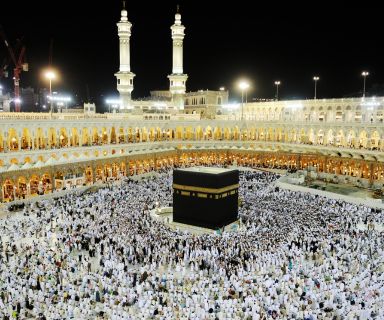
I remember arriving at the Haram for the first time and being completely overwhelmed — not just by the sheer size of it, but by the feeling of it. Thousands upon thousands of people in white, moving together, all there for exactly the same reason. No status. No wealth. No nationality. Just Muslims, together, in worship. Nothing fully prepares you for that moment.
Who Must Perform Hajj?
Hajj becomes obligatory when four conditions are met:
You must be Muslim. You must be physically able to undertake the journey. You must be financially able — meaning you can afford it without falling into debt or leaving your family without provision. And you must have safe and accessible travel routes available.
For Muslims living in the UK, the financial aspect deserves honest attention. A Hajj package from the UK typically costs anywhere between £8,000 and £12,000 or more, depending on the level of accommodation, the operator, and the proximity of your hotel to the Haram. On top of the package itself, you will have additional personal spending money, toiletries, clothing, medicines, and other costs to factor in.
This is not to discourage anyone. If you are able, do not delay. Every year people say “next year” until years become decades. But go with your finances in order — borrowing money specifically to perform Hajj is something scholars differ on and is generally discouraged.
The Three Types of Hajj
There are three valid ways to perform Hajj, and your operator or scholar will guide you on which is most appropriate. However, if you are travelling from the UK, it is almost certain your package will follow Hajj Tamattu — so that is worth understanding well.
Hajj Tamattu
Hajj Tamattu is the most common method for UK pilgrims. You arrive in Makkah, enter the state of Ihram, perform Umrah, and then exit Ihram. When the 8th of Dhul Hijjah arrives, you re-enter Ihram specifically for Hajj. This separation between Umrah and Hajj gives you a window — usually several days — to rest and recover in Makkah before the main rites begin.
Hajj Qiran
Hajj Qiran involves combining Umrah and Hajj in a single Ihram, without exiting in between. This is more demanding physically and spiritually.
Hajj Ifrad
Hajj Ifrad is Hajj alone, without performing Umrah as part of the trip.
For most UK travellers, Tamattu is the practical and recommended choice. The days between Umrah and Hajj are not dead time — use them to rest your feet, learn the layout of the Haram, and mentally settle into what is coming.
A Day-by-Day Overview of Hajj
One of the most important things I can tell you is this: know the rituals before you arrive. Do not rely on following the group. Understand what you are doing, why you are doing it, and when it happens. Here is a simplified overview:
8th Dhul Hijjah – The Journey to Mina
This is the day you enter Ihram (if you haven’t already) and make your way to Mina, a valley about 5 kilometres from Makkah. You will spend the day and night here in your tent. It is an important day of mental and spiritual preparation. Spend it in prayer, recitation of the Talbiyah, and reflection. The real intensity begins tomorrow.
9th Dhul Hijjah – The Day of Arafat
This is the single most important day of Hajj. Some scholars say it is Hajj. If you miss the standing at Arafat, your Hajj is not valid.
You will travel from Mina to the plain of Arafat in the morning. You must remain there from after Dhuhr until sunset — standing, sitting, supplicating, weeping, asking. This is wuquf, the standing. These few hours are unlike anything else in the Islamic year. Every sin, every regret, every prayer — bring it all. The Prophet, peace be upon him, described Hajj in just two words: “Hajj is Arafat.”
I stood on that plain and did not know where to start. So I just started talking to Allah — quietly, in my own words, in English. And I wept like I hadn’t in years. Do not worry about using formal du’a books if the Arabic doesn’t come naturally in those moments. Speak from your heart.
After sunset, you will move to Muzdalifah, where you spend the night under the open sky, collecting pebbles for the next day. Sleep if you can — you will need it.
10th Dhul Hijjah – Eid Day: The Busiest Day
This is the day of Eid ul-Adha, and it is the most physically demanding day of Hajj. After Fajr in Muzdalifah, you will return to Mina to:
- Stone the Jamarat (the large pillar representing the rejection of Shaytan)
- Perform the sacrifice (Qurbani — usually handled by your operator)
- Shave or cut your hair, exiting partial Ihram
- Return to Makkah for Tawaf al-Ifadah and Sa’i
This is a lot to accomplish in one day. You will be exhausted. The crowds will be enormous. This is where your physical preparation and your patience will be genuinely tested.
11th and 12th Dhul Hijjah – The Days of Tashreeq
You return to Mina and spend these nights there. Each day you stone all three Jamarat. If you are doing the shortened version of Hajj, you can leave Mina on the 12th before sunset. If you stay for the 13th, that is the full version and is considered better.
These days feel calmer. Use them for extra worship and gratitude.
Preparing for Hajj From the UK
Here is where I want to be very direct with you, because this is where most first-time pilgrims fall short — including me.
Choosing Your Package
Not all Hajj operators are equal. In the UK, always use a Ministry of Hajj licensed operator — you can verify this. Read reviews. Ask within your community. The price difference between a cheap and a mid-range package often comes down to one thing that matters enormously: how far your hotel is from the Masjid al-Haram.
A hotel that is 200 metres from the Haram is a completely different experience from one that is 2 kilometres away when you are performing five daily prayers and Tawaf multiple times a day. I learned this the hard way. We were not close. Those extra kilometres added up significantly — especially on your feet.
Documents
Make sure you have your passport (with at least six months validity), your Hajj visa (arranged by your operator), and the required vaccination certificates — specifically meningitis ACWY, which is mandatory. Keep copies of everything, both physical and digital.
Physical Preparation – Please Do Not Skip This
I cannot emphasise this enough. You will walk between 10 and 20 kilometres per day during Hajj. Some days considerably more. If you are not used to sustained walking, Hajj will be brutal on your body.
Start walking every single day — even if it is just 30 minutes. Build up to longer distances. Practice walking in sandals rather than trainers, because your feet need to adjust. If you have any joint, knee, or back issues, speak to a doctor in advance and bring appropriate support.
I saw elderly pilgrims in genuine agony because they had not prepared physically. I also saw younger people struggling because they underestimated what the body goes through in that heat, in those crowds, over multiple days. Take the physical preparation seriously.
Mental Preparation
Prepare yourself for crowds that are genuinely unlike anything you have ever experienced. Millions of people in a relatively small geographic area, all trying to perform the same rituals at the same time. Things will not go to plan. There will be delays. There will be moments of confusion. The bus will be late. The tent will be hot.
The mindset that carried me through was simple: I am here for worship, not comfort. Every inconvenience is part of the journey. Every moment of difficulty is an opportunity for patience and reward.
Ihram: What You Actually Need to Know
Ihram refers to both the physical garment and the spiritual state you enter when beginning Hajj or Umrah.
For men, Ihram consists of two pieces of white, unstitched cloth — one wrapped around the lower body and one draped over the upper body. No socks, no underwear, no stitched clothing. You will wear sandals. At first it feels strange and somewhat vulnerable. After a day, you stop noticing.
For women, Ihram has no specific garment. You wear your normal, modest Islamic clothing — typically an abaya with a hijab. Your face and hands remain uncovered.
While in the state of Ihram, there are things you must avoid:
- Using perfume or scented products of any kind
- Cutting hair or nails
- Sexual relations
- Hunting or harming animals
- Arguing or behaving badly — this one is mentioned in the Quran specifically
Buy unscented soap, shampoo, and deodorant before you go. Bring two or three sets of Ihram garments for men so you have clean ones available. A good waist belt pouch to hold your passport and money while in Ihram is worth its weight in gold.
Common Mistakes First-Time Pilgrims Make
Having been through it and spoken to many others who have, these are the patterns that come up again and again:
Overpacking. You do not need half of what you think you need. Every extra kilogram you bring will be a kilogram you are carrying through the heat of Makkah. Pack light and deliberately.
Not preparing physically. I’ve mentioned this already but it bears repeating. The number of people who arrive having done no physical preparation and are genuinely suffering by day two is heartbreaking — and entirely avoidable.
Following the group without understanding the rituals. If you don’t know why you are stoning the Jamarat, you are missing the spiritual dimension of an act that is meant to connect you to the story of Ibrahim, alayhi salam. Learn what you are doing before you do it.
Ignoring hydration. Makkah is extremely hot. You will be outside for extended periods. Drink water constantly — more than you think you need. Zamzam water is freely available and many pilgrims drink exclusively from it. Dehydration sneaks up on you and can ruin a day or worse.
Leaving learning the rituals until the last minute. Read. Watch proper scholarly explanations. Practice the Talbiyah. Learn the du’as. Understand the sequence of events. Knowledge transforms the experience from going through the motions into genuine, conscious worship.
What to Pack for Hajj
This deserves its own full post, but here is a solid starting point:
Essentials:
- Ihram garments (men: at least 2–3 sets; women: modest abaya and hijab sets)
- Comfortable sandals — broken in before you travel, not brand new
- Small backpack you can carry daily
- Reusable water bottle
- Unscented toiletries (soap, shampoo, deodorant, moisturiser — Makkah is drying)
Practical Must-Haves:
- Waist belt or money belt for passport, cash, and documents
- Flip flops for tent areas
- Portable power bank — your phone is your map, your compass, and your lifeline
- Small first aid kit (blister plasters, pain relief, rehydration salts)
- Lightweight travel towel
What to Leave Behind: Anything you “might need.” If you’re unsure, don’t bring it. You can buy most things in Makkah. Weight and space are precious.
Health and Safety
The heat in Makkah during Hajj season is no joke. It regularly exceeds 40°C. Combined with the physical exertion and the crowds, heat-related illness is a genuine risk. Take the following seriously:
- Stay hydrated constantly — do not wait until you are thirsty
- Avoid peak heat where possible — if you can do Tawaf in the early morning or at night, do so
- Use shade whenever it is available
- Bring basic medicines — antihistamines, pain relief, antidiarrheal, cold and flu tablets, blister care
- Wear lightweight, breathable clothing outside of Ihram
If you take regular medication, speak to your GP before travelling. Make sure you have enough supply for the entire trip plus extra, as getting specific medications in Makkah can be difficult.
What Nobody Tells You — The Real Experience
I want to end on this, because it matters.
You will feel overwhelmed. There will be moments where you stand in a crowd of thousands, not knowing which direction to face or what you are supposed to do next, and your group leader is somewhere behind you and the Talbiyah is rising from every direction, and you will feel a kind of beautiful, peaceful disorientation. That is normal. That is part of it.
Things will go wrong. The bus will break down. You will get separated from your group at some point. The tent will feel too small and too hot. You will be tired in a way that goes bone-deep. And then you will be at Arafat, or standing in front of the Kabah, or making du’a in the depths of the night, and none of that will matter at all.
The biggest misconception people carry into Hajj is that it is a holiday. It is not. It is an act of worship — one of the most demanding ones in Islam. Your comfort is not the point. Your focus, your intention, your patience, and your sincerity — those are the point.
Go with low expectations for comfort and high expectations for spiritual experience, and Hajj will exceed every hope you have.
Final Thoughts
Hajj is not about perfection. You will make mistakes. You may forget a step or mix up a sequence. What matters is your intention, your effort, and your sincerity. Allah knows what is in your heart.
If you prepare well — physically, practically, and spiritually — you give yourself the best possible chance to complete this incredible pillar of your faith with presence and gratitude rather than exhaustion and confusion.
I hope this guide has helped. There is much more to explore in the sections linked throughout — from detailed packing lists, to choosing the right UK Hajj package, to a deeper dive into each ritual. But if you have read this far, you are already far better prepared than most people who board that flight.
May Allah accept from all of us. Ameen.
FAQs
How much does Hajj cost from the UK?
This is the number one question, and the honest answer is: it depends — but you should budget a minimum of £6,000 to £8,000 for a standard package, and costs can easily reach £10,000 to £12,000 or more for better hotel proximity and premium arrangements.
The package itself covers your flights, accommodation in Makkah and Madinah, transport during Hajj, and meals. What it doesn’t always cover is personal spending money, additional travel within Saudi Arabia, souvenirs, and anything extra you might need on the ground.
In 2025 and 2026, UK pilgrims have been booking through the official Nusuk platform (hajj.nusuk.sa), overseen by the Saudi Ministry of Hajj and Umrah. The UK quota fills up extremely fast — we’re talking hours, not days — so be ready to book as soon as packages open.
Do not let cost be the reason you keep delaying. If you are able, start saving now. Many families save for years. It is worth every penny.
How do I book Hajj from the UK?
The process has changed significantly in recent years. UK pilgrims now book through the Nusuk Hajj portal (hajj.nusuk.sa), which is the official Saudi government platform. You create an account, upload your documents, and when packages open, you select and pay directly through the platform.
Here is what you will need to register:
- A valid UK passport (valid at least 6 months beyond your travel dates — for Hajj 2026, it should be valid through end of 2026)
- A profile photo meeting Saudi requirements
- Vaccination certificates (meningitis ACWY is mandatory)
The UK Hajj quota is around 3,500 places and it has sold out within hours in recent years. The Council of British Hajjis (CBHUK) publishes updates and guidance specific to UK pilgrims — bookmark their website and sign up for their newsletter if you are planning ahead.
One important note: tourist visas, student visas, and Umrah visas cannot be used for Hajj. You must have a dedicated Hajj visa, which is issued after your Nusuk booking is confirmed and biometrics are completed.
What is the difference between Hajj and Umrah?
This question comes up constantly, and it’s a good one to understand clearly before you travel.
Umrah is a voluntary pilgrimage that can be performed at any time of year. It involves entering Ihram, performing Tawaf (circling the Kabah seven times), and Sa’i (walking between Safa and Marwah). It takes a few hours to complete and is sometimes called the “minor pilgrimage.”
Hajj is the obligatory pilgrimage that occurs once a year during the specific days of Dhul Hijjah. It includes all the rites of Umrah plus additional rituals spread over multiple days — the journey to Mina, the standing at Arafat, the night in Muzdalifah, stoning the Jamarat, the sacrifice, and more.
The simplest way to understand the difference: Umrah is something you can do again and again throughout your life, and it is deeply rewarding. Hajj is the once-in-a-lifetime obligation, with unique rituals that cannot be performed at any other time of year. If you are doing Hajj Tamattu (the most common type for UK pilgrims), you will actually perform Umrah first as part of the same trip, then Hajj a few days later.
Can a woman go to Hajj without a mahram (male guardian)?
This question is increasingly common, especially among British Muslim women travelling without a husband or male relative.
The traditional position in Islamic scholarship has been that a woman requires a mahram — a husband or close male relative — to accompany her for Hajj. However, there has been significant scholarly discussion on this, particularly for women who are older, travelling in a well-organised group, or whose circumstances make a mahram genuinely unavailable.
From a practical standpoint, Saudi regulations have been updated in recent years. Women no longer require a mahram to perform Umrah and, for certain categories of pilgrims including those booking through official organised groups, restrictions have been eased. However, Hajj regulations can differ from Umrah regulations, and requirements change year to year.
My strong advice: consult a trusted Islamic scholar whose opinion you respect for the religious ruling, and check the latest official Saudi requirements through CBHUK or the Nusuk platform for the practical logistics. Do not rely on outdated information from online forums.
What vaccinations do I need for Hajj?
Saudi Arabia has mandatory vaccination requirements for all Hajj pilgrims, and your UK Hajj operator or the Nusuk platform will require proof before your booking is confirmed.
The key mandatory vaccination is:
- Meningitis ACWY — this is non-negotiable and has been required for many years due to the historical risk of meningococcal disease spreading during the mass gathering
Depending on the year and current health guidelines, you may also need:
- COVID-19 vaccination certificate (requirements have varied in recent years — check current guidance closer to your travel date)
It is also strongly advisable — though not always mandatory — to be up to date on:
- Seasonal flu vaccine
- Typhoid
- Hepatitis A and B
Visit your GP or a travel clinic at least 6–8 weeks before departure to allow time for any vaccines that need multiple doses. Keep original vaccination certificates safe — you will need them at check-in and potentially at Saudi immigration.
What should I pack for Hajj?
Whole posts could be written on this (and I have written one — link coming). But the short version is: pack light, pack practical, pack unscented.
The things you absolutely cannot forget:
- Ihram garments (men: 2–3 sets of unstitched white cloth; women: modest abaya and hijab sets)
- Comfortable sandals — broken in before you travel, not brand new. Your feet will thank you
- Unscented toiletries — soap, shampoo, deodorant. Nothing with fragrance is permitted in Ihram
- Waist belt or money belt — to safely carry your passport, cash, and documents in crowds
- Portable power bank — your phone is your map, your communication line, and your prayer app
- Rehydration salts and basic medicines — pain relief, blister plasters, antidiarrheal, cold and flu tablets
- Small lightweight backpack for daily use
What to leave behind: anything you are packing “just in case.” If you are unsure, leave it. Most things can be bought in Makkah, and every extra kilogram is a kilogram you are carrying in 40°C heat.
How physically demanding is Hajj?
Very. This is not an exaggeration and I wish someone had been more direct with me when I asked this question before going.
During the main days of Hajj you will walk between 10 and 20 kilometres per day, sometimes more. You will be doing this in intense heat — Makkah regularly exceeds 40°C in summer. You will be walking through enormous crowds, standing for long periods at Arafat, and getting limited sleep over multiple consecutive days.
In 2024, more than 1,300 people sadly died during Hajj, largely due to heat-related illness — many of them elderly pilgrims or those who were not physically prepared or who travelled without official packages.
The good news: preparation makes an enormous difference. Start walking daily in the months before you travel. Build up your distances. Get your feet used to sandals. If you have any health conditions, speak to your doctor early. And once you are there, take the heat seriously — stay hydrated, seek shade, rest when you can.
Hajj was never meant to be easy. But with the right preparation, it is completely manageable for the vast majority of people.
What is Ihram and what are the rules?
Ihram refers to two things: the physical garments you wear, and the spiritual state you enter when beginning the pilgrimage.
For men, the Ihram garment is two pieces of plain white unstitched cloth — one wrapped around the lower body, one draped over the upper body. No stitched clothing, no socks, no underwear. Sandals are worn on the feet.
For women, there is no specific Ihram garment. Women wear their normal modest Islamic clothing — typically an abaya with a hijab. The face and hands are left uncovered.
Once you enter the state of Ihram, certain things become prohibited:
- Using any perfume or scented products (this includes scented soap — switch to unscented before entering Ihram)
- Cutting hair or nails
- Sexual relations
- Arguing, swearing, or behaving badly — the Quran specifically mentions this
- Hunting or harming animals
One practical tip that took me by surprise: make sure your unscented products are ready before you enter Ihram. I bought unscented soap and shampoo in London. Some pilgrims forget and end up using scented hotel products — technically this would require a penalty (dam). Small thing, easy to avoid.
What happens if I make a mistake during Hajj?
This question causes a lot of anxiety for first-time pilgrims, and I want to be honest: mistakes happen. The Prophet, peace be upon him, brought this religion for all of humanity, not just scholars and experts.
If you unintentionally do something prohibited during Ihram — accidentally use a scented product, cut a nail without realising — this is generally covered by either:
- Sincere repentance (tawbah)
- Dam — a specific expiation, usually in the form of a sacrifice, fasting, or charity, depending on the type of violation
The key distinction is between intentional and unintentional violations. If you make a genuine mistake without knowing or meaning to, the ruling is considerably more lenient. The important thing is not to panic, and to ask a scholar or your group’s guide as soon as possible after the incident.
What matters most is your intention, your sincerity, and your effort. Allah knows what is in your heart.
When is Hajj 2026?
Hajj follows the Islamic lunar calendar, which moves approximately 10–11 days earlier each year relative to the Gregorian calendar.
For Hajj 2026, the pilgrimage is expected to fall around late May to early June 2026, corresponding to 8–13 Dhul Hijjah 1447 AH. The exact Gregorian dates will be confirmed based on the moon sighting in Saudi Arabia.
For Hajj 2025, the pilgrimage took place from 4th to 9th June 2025.
If you are planning for 2026, the time to start preparing is now — not just financially and logistically, but spiritually and physically. The Nusuk platform typically opens registration several months in advance. UK quota places fill within hours of packages going live, so you need to be ready with your documents uploaded and your e-Wallet funded before booking opens.
Check CBHUK (cbhuk.org) regularly for UK-specific updates and announcements as 2026 approaches.